pure tungsten guide rod
Pure tungsten guide rods are essential components, prized for exceptional density and high melting points, finding critical roles across diverse industrial applications․
What are Pure Tungsten Guide Rods?
Pure tungsten guide rods are cylindrical components crafted from nearly 100% tungsten, a rare metal renowned for its remarkable physical properties․ These rods aren’t merely simple metal cylinders; they are precision-engineered elements vital in applications demanding extreme conditions․ They serve as guides, structural supports, and shielding components․
Notably, additive manufacturing, or 3D printing, can now produce a 100mm rod in just 8 hours, a significant improvement over traditional forging’s 3-day timeframe․ Their primary function revolves around leveraging tungsten’s inherent characteristics – high density, exceptional strength, and superior resistance to high temperatures and radiation․
Key Properties of Pure Tungsten
Pure tungsten boasts a unique combination of properties making it ideal for demanding applications․ Its exceptionally high melting point – the highest of all metals – allows it to withstand extreme temperatures without deformation․ Coupled with remarkable density, tungsten provides excellent mass for applications like radiation shielding․
Furthermore, tungsten exhibits superior strength and hardness, ensuring durability under stress․ It’s also a poor conductor of electricity, contributing to its effectiveness in specific electrical applications․ These characteristics, combined with its neutron absorption capabilities, make it invaluable in specialized fields․

Applications of Pure Tungsten Guide Rods
Pure tungsten guide rods serve vital roles in aerospace, medical radiation shielding, and high-temperature welding, leveraging their unique properties for optimal performance․
Aerospace Industry Applications
Pure tungsten guide rods are increasingly utilized in aerospace due to their remarkable high-temperature resistance and density․ These properties are crucial in applications like rocket nozzle components, where extreme heat and structural integrity are paramount․ Furthermore, tungsten’s high density provides effective counterbalancing in aircraft control surfaces, enhancing maneuverability and stability․
Synthetic oils are often preferred as coolants during machining for aerospace components․ The material’s resistance to thermal expansion minimizes distortion during flight, ensuring precision and reliability․ Utilizing tungsten alloys, like W-Cu, addresses both heat and vibration challenges, extending component lifespan and improving overall system performance within demanding aerospace environments․
Medical Industry Applications: Radiation Shielding
Pure tungsten guide rods are exceptionally effective in medical radiation shielding, particularly for X-ray and gamma-ray applications․ Their high atomic number and density significantly attenuate radiation, protecting both patients and medical personnel․ Utilizing 95% tungsten rods has demonstrably reduced radiation attenuation, as evidenced by a 22% improvement in a 2024 hospital equipment audit․
Precise shielding thickness calculations, often employing Monte Carlo simulation, are vital for optimal protection․ Ester-based coolants are recommended during fabrication to maintain material purity and biocompatibility for medical use, ensuring patient safety and regulatory compliance․
High-Temperature Welding Electrodes
Pure tungsten guide rods serve as crucial electrodes in specialized, high-temperature welding processes like Tungsten Inert Gas (TIG) welding․ Their remarkable resistance to melting and erosion at extreme temperatures ensures arc stability and weld quality․ However, electrode taper significantly impacts performance; a 15-degree taper versus a 30-degree taper increased spatter by 40% when welding stainless steel․
Adhering to AWS D10․11 guidelines is paramount․ Precise control over electrode geometry and consistent material quality are essential for reliable welding outcomes and minimizing defects․

Manufacturing Processes for Pure Tungsten Guide Rods
Pure tungsten guide rods are commonly produced via powder metallurgy (PM) or through swaging and drawing techniques, ensuring precise dimensions and material integrity․
Powder Metallurgy (PM) Production
Powder Metallurgy (PM) is a dominant method for crafting pure tungsten guide rods, offering cost-effectiveness and design flexibility․ This process begins with finely milled tungsten powder, meticulously compacted into the desired rod shape using isostatic pressing – ensuring uniform density․ Subsequently, these ‘green’ compacts undergo sintering at extremely high temperatures, typically exceeding 2700°C, in a vacuum or controlled atmosphere․
This sintering stage eliminates porosity, bonding the tungsten particles together to achieve near-theoretical density․ PM allows for the creation of complex geometries and minimizes material waste, making it ideal for producing rods with specific compositions and tailored microstructures․ The resulting rods exhibit excellent mechanical properties and are suitable for demanding applications․
Swaging and Drawing Techniques
Swaging and drawing represent complementary techniques used to refine the dimensions and enhance the properties of pure tungsten guide rods produced via Powder Metallurgy; Swaging, a forging process, reduces the rod’s diameter through compressive forces, improving grain structure and strength․ Following swaging, drawing further refines the rod’s size and surface finish․
This involves pulling the tungsten rod through a series of progressively smaller dies, achieving precise tolerances and exceptional concentricity․ These processes are often performed sequentially, with intermediate annealing steps to maintain ductility and prevent cracking․ The combination yields rods with superior mechanical integrity and dimensional accuracy․

Material Specifications and Standards
Adherence to standards like ISO 6848 is crucial for ensuring consistent quality and traceability of pure tungsten guide rods, verifying purity levels and properties․
ISO 6848 Certification
ISO 6848 certification is a globally recognized standard specifically for sintered tungsten and tungsten heavy alloy materials, including guide rods․ This certification guarantees that the tungsten product meets stringent requirements regarding chemical composition, density, and mechanical properties․ Verification of ISO 6848 compliance ensures consistent material quality and reliability for critical applications․
Manufacturers achieving this certification demonstrate a commitment to quality control and adherence to internationally accepted best practices․ It provides assurance to end-users, particularly in aerospace and medical industries, that the tungsten guide rods will perform as expected under demanding conditions․ Always verify this certification before integration․
Tungsten Purity Levels
Tungsten purity significantly impacts the performance of guide rods, especially in radiation shielding and high-temperature environments․ While “pure” tungsten isn’t absolute, commercially available grades typically range from 99․95% to 99․999% purity․ Higher purity levels minimize impurities that can compromise mechanical strength or introduce unwanted interactions․
For applications demanding maximum radiation attenuation, such as X-ray shielding utilizing 95W rods, higher purity is crucial․ Conversely, certain applications may tolerate slightly lower purity levels if cost is a primary concern․ Careful consideration of the application’s requirements dictates the appropriate purity grade․

Considerations for Design and Implementation
Successful integration demands matching the application’s needs to tungsten’s properties; rod diameter must align with anticipated stress levels for optimal performance and longevity․
Matching Application to Material Properties
Careful material selection is paramount when utilizing pure tungsten guide rods․ For applications demanding resistance to both heat and vibration, a tungsten-copper (W-Cu) alloy often proves superior․ However, when radiation shielding is the primary concern, the high atomic number of pure tungsten makes it the ideal choice․
Understanding these nuanced differences ensures optimal performance․ Selecting the appropriate alloy, or pure tungsten itself, directly impacts the component’s longevity and effectiveness within its intended environment․ Prioritize a thorough assessment of application requirements before finalizing material specifications․
Rod Diameter and Stress Levels
Precise diameter selection is crucial, directly correlating with the rod’s ability to withstand applied stress․ For structural applications bearing significant loads, a 3mm diameter is generally recommended to ensure adequate strength and prevent deformation․ Conversely, applications prioritizing precision, such as radiation shielding, may effectively utilize a smaller 1mm diameter․
Carefully analyze anticipated stress levels during the design phase․ Underestimation can lead to premature failure, while excessive diameter adds unnecessary weight and cost․ Proper sizing optimizes performance and extends the service life of the tungsten guide rod․

Machining and Fabrication
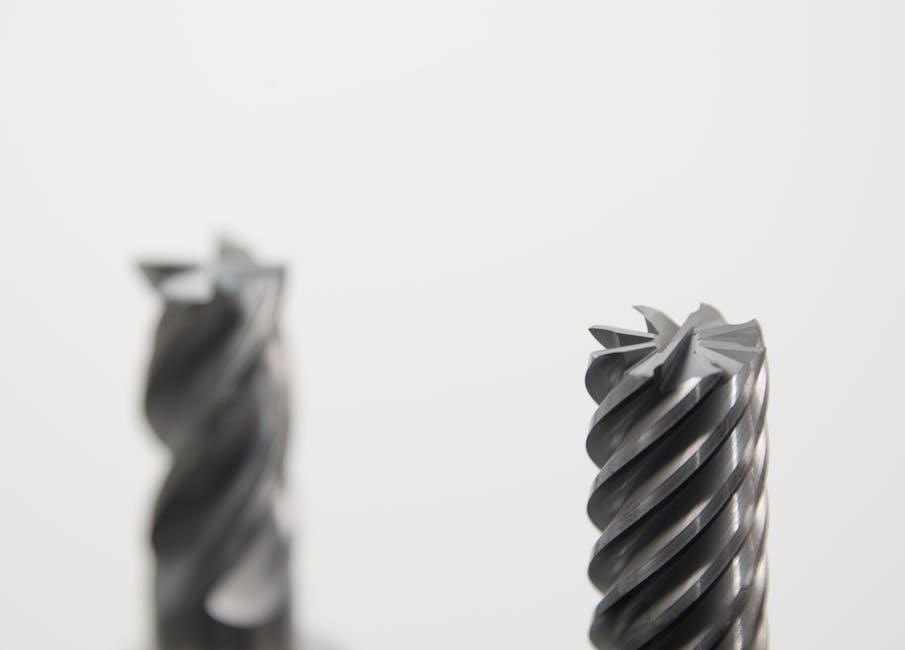
Machining pure tungsten demands specialized tools like Polycrystalline Diamond (PCD) or Cubic Boron Nitride (CBN) due to its extreme hardness and brittleness․
Recommended Machining Tools (PCD/CBN)
Traditional carbide tools rapidly dull when attempting to machine pure tungsten, necessitating the use of Polycrystalline Diamond (PCD) or Cubic Boron Nitride (CBN) tooling․ PCD offers superior wear resistance for turning and milling, while CBN excels in applications involving interrupted cuts․ Selecting the correct grade of PCD or CBN is crucial; finer grit tools are preferred for finishing operations, ensuring surface integrity․
Tool geometry also plays a vital role, with positive rake angles minimizing cutting forces․ Employing a rigid machine setup and vibration damping is essential to prevent tool breakage․ Furthermore, proper tool preparation, including honing and polishing, extends tool life and improves machining accuracy when working with these rods․
Coolant Selection for Different Industries
Coolant choice is paramount when machining pure tungsten guide rods, impacting both tool life and workpiece quality․ For medical applications demanding high purity, ester-based coolants are recommended due to their non-reactive nature and minimal contamination risk․ Aerospace applications often utilize synthetic oils, providing excellent lubrication and thermal conductivity․
Avoid water-based coolants as they can cause oxidation and embrittlement of the tungsten․ Maintaining coolant cleanliness is vital; filtration systems should be employed to remove swarf and debris․ Consistent coolant concentration monitoring ensures optimal performance and prevents corrosion, extending both tool and rod lifespan․

Post-Processing Treatments
Post-processing is crucial for optimizing tungsten rod properties; stress relief annealing at 1,000°C for 2 hours enhances structural integrity and minimizes internal stresses․
Stress Relief Annealing
Stress relief annealing is a vital post-processing step for pure tungsten guide rods, particularly those intended for structural applications․ This heat treatment, typically performed at 1,000°C for approximately two hours, effectively reduces residual stresses introduced during manufacturing processes like swaging or drawing․ These internal stresses can compromise the rod’s mechanical performance and long-term reliability․
Annealing enhances ductility and minimizes the risk of cracking or deformation under load․ Proper documentation of the annealing process – including temperature, duration, and cooling rate – is essential for quality control and ensuring consistent material properties․ It’s a critical step in preparing tungsten rods for demanding applications․
Surface Finishing Techniques
Surface finishing of pure tungsten guide rods is crucial for optimizing performance and ensuring compatibility with specific applications․ While tungsten is inherently hard and brittle, techniques like polishing and grinding can achieve desired surface smoothness and dimensional accuracy․ Electropolishing offers a refined finish, minimizing surface imperfections and enhancing corrosion resistance․
The choice of technique depends on the intended use; for instance, medical applications demand exceptionally smooth surfaces to prevent contamination․ Careful consideration must be given to avoid introducing new stresses during finishing․ Maintaining tight tolerances and a consistent surface quality are paramount for reliable operation․

Quality Control and Testing
Rigorous testing, including non-destructive methods and Monte Carlo simulation for radiation shielding, verifies the integrity and performance of pure tungsten guide rods․
Monte Carlo Simulation for Radiation Shielding
Monte Carlo simulation is a crucial quality control step when pure tungsten guide rods are destined for radiation shielding applications, particularly within the medical and nuclear industries․ This computational technique models the behavior of photons and neutrons as they interact with the tungsten material․
By simulating millions of particle trajectories, engineers can accurately predict radiation attenuation levels for varying rod thicknesses and geometries․ This ensures optimal shielding effectiveness, meeting stringent safety regulations and minimizing radiation exposure․ The simulation validates design choices, confirming the rods provide adequate protection before implementation, and reduces the need for costly physical testing․
Non-Destructive Testing Methods
Non-destructive testing (NDT) is vital for ensuring the integrity of pure tungsten guide rods without compromising their functionality․ Techniques like ultrasonic testing detect internal flaws and voids within the material, while radiographic inspection reveals density variations and cracks․
Eddy current testing identifies surface defects and assesses material conductivity․ These methods are crucial for verifying the rods meet stringent quality standards, particularly for critical applications in aerospace and medical fields․ NDT provides a comprehensive evaluation, confirming the rods’ structural soundness and reliability before deployment, preventing potential failures․

Future Trends and Innovations
Additive manufacturing (3D printing) promises faster production of complex tungsten rod geometries, while advanced alloys enhance performance characteristics and broaden applications․
Additive Manufacturing (3D Printing) of Tungsten Rods
Additive manufacturing (AM), or 3D printing, represents a revolutionary shift in tungsten rod production․ Traditionally, forging or powder metallurgy were dominant, but AM offers design freedom and reduced lead times․ Current data indicates printing a 100mm tungsten rod takes approximately 8 hours, a significant improvement over the 3-day forging process․
This technology allows for intricate geometries and internal features previously unattainable․ However, challenges remain in achieving full density and controlling microstructure during the printing process․ Ongoing research focuses on optimizing laser parameters and powder bed fusion techniques to enhance material properties and scalability for widespread industrial adoption of 3D-printed tungsten rods․
Advanced Alloys and Composites
While pure tungsten excels in specific applications, combining it with other materials unlocks enhanced performance characteristics․ Tungsten-copper (W-Cu) alloys, for instance, offer superior thermal conductivity and reduced thermal stress, ideal for high-heat, high-vibration environments․ These composites balance tungsten’s strength with copper’s ductility․
Research explores incorporating ceramic reinforcements to further improve high-temperature strength and creep resistance․ The selection of alloy or composite depends heavily on the intended application, balancing properties like density, strength, and thermal behavior․ These advancements broaden the utility of tungsten beyond its inherent capabilities․