
bea bodyguard manual
Bodyguards provide private security escort services‚ demanding intensive training and specific qualifications like age verification and background checks‚ often with military or law enforcement experience.
What Does a Bodyguard Do?
Bodyguards are responsible for safeguarding individuals from potential threats‚ encompassing proactive surveillance and reactive defensive measures; This involves meticulously assessing risks‚ creating secure environments‚ and skillfully managing crowds. They expertly employ evasive driving techniques and maintain constant situational awareness‚ anticipating and neutralizing dangers before they escalate.
Furthermore‚ a crucial aspect of their role is providing discreet‚ professional protection‚ ensuring the principal’s safety and peace of mind while upholding confidentiality.
The Demand for Bodyguard Services
The need for bodyguard services is consistently growing‚ driven by heightened security concerns for high-profile individuals and increasing global instability. This demand spans various sectors‚ including entertainment‚ corporate leadership‚ and political figures. As threats evolve‚ so does the requirement for skilled protection‚ fueling opportunities across the US‚ Europe‚ and Asia.
Consequently‚ specialized training and certifications are becoming increasingly vital for aspiring professionals.

Essential Qualifications and Requirements
Becoming a bodyguard requires being 18-21 years old‚ passing a background check‚ completing state-approved training‚ and potentially possessing military or law enforcement experience.
Age and Background Checks
Aspiring bodyguards generally must be at least 18‚ with some positions requiring applicants to be 21 years of age. A thorough background check is universally mandatory‚ scrutinizing criminal history‚ driving records‚ and potentially financial stability. This vetting process ensures the safety and trustworthiness of individuals entrusted with protecting clients.
The depth of the check varies‚ but aims to identify any red flags that could compromise security or professional conduct.
Educational Requirements: High School Diploma & Beyond
A high school diploma serves as the foundational educational requirement for entering the bodyguard profession. However‚ career-specific education is crucial for advancement. This can be obtained through on-the-job training‚ a relevant degree program‚ or specialized bodyguard training courses.
Formal education enhances skills and demonstrates commitment to professional development‚ increasing employability.
Prior Experience: Military‚ Law Enforcement‚ or Executive Protection
Many successful bodyguards possess a background in military service‚ law enforcement‚ or dedicated executive protection roles. These experiences cultivate essential skills like discipline‚ tactical awareness‚ risk assessment‚ and emergency response.
Such backgrounds provide a significant advantage‚ offering practical experience directly applicable to the demands of close protection work.
Bodyguard Training Programs
BTP Bodyguard Training Courses offer intensive instruction across the US‚ Europe‚ and Asia‚ covering essential bodyguard requirements for a successful career path.
Overview of BTP Bodyguard Training Courses
BTP stands as one of the world’s most respected bodyguard schools‚ welcoming individual applicants into its comprehensive training programs. These courses are strategically held throughout the year‚ spanning locations across the United States‚ Europe‚ and Asia‚ ensuring accessibility for aspiring protectors. The curriculum is designed to equip students with the vital skills and knowledge necessary to excel in this demanding profession‚ focusing on practical application and real-world scenarios.
State-Approved Training Hours & Licensing
Becoming a bodyguard necessitates completing state-approved training‚ with required hours varying significantly – ranging from 8 to 40 hours depending on specific state regulations. Beyond training‚ obtaining the proper licensing is crucial for legal operation. Aspiring protectors must also meet age requirements‚ generally 18-21 years old‚ and successfully pass a thorough background check to demonstrate suitability for the role.
Choosing the Right Training Program
Selecting a bodyguard training program requires careful consideration; options like BTP Bodyguard Training Courses are globally available in the US‚ Europe‚ and Asia. Research program intensity and curriculum‚ ensuring it covers essential bodyguard requirements. A quality program prepares students for the realities of the profession‚ offering comprehensive skills and knowledge for a successful career path.

Physical Fitness for Bodyguards
Bodyguards must develop functional strength‚ endurance‚ and stamina‚ alongside proficient self-defense and combat skills‚ to effectively fulfill protection duties.
Developing Functional Strength
Functional strength is paramount for bodyguards‚ differing from bodybuilding; it focuses on movements used in real-world protective scenarios. Training should incorporate exercises mimicking lifting‚ carrying‚ and maneuvering a protectee‚ often under duress. This includes compound movements like squats‚ deadlifts‚ and overhead presses‚ building a robust foundation. Core strength is also vital for stability and power transfer during defensive tactics‚ ensuring quick reactions and sustained physical exertion throughout long shifts.
Endurance and Stamina Training
Bodyguard duties demand exceptional endurance and stamina‚ requiring prolonged periods of alertness and physical activity. Training regimens should include cardiovascular exercises like running‚ swimming‚ and cycling to build aerobic capacity. Interval training‚ alternating high-intensity bursts with recovery periods‚ is crucial for simulating the unpredictable demands of the job. Consistent training builds resilience against fatigue‚ enabling bodyguards to maintain peak performance during extended operations and stressful situations.
Self-Defense and Combat Skills
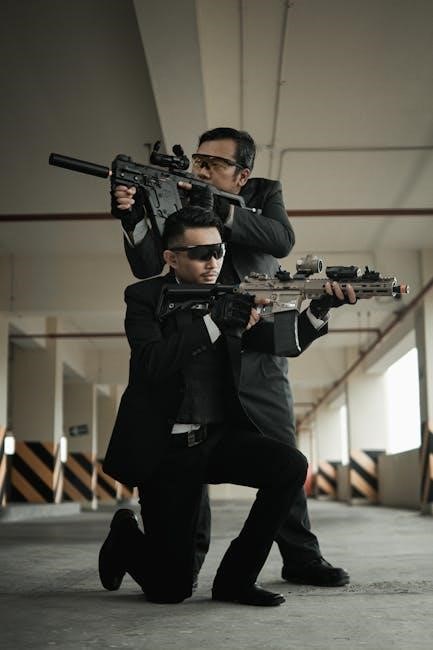
Bodyguards require comprehensive self-defense and combat skills to effectively neutralize threats. Training encompasses unarmed combat techniques‚ including striking‚ grappling‚ and takedowns. Proficiency in defensive tactics is vital for protecting the principal during close-quarters confrontations. Furthermore‚ weapon retention and disarming techniques are essential components‚ alongside scenario-based training simulating real-world attack situations‚ ensuring rapid and decisive responses.
Core Skills and Techniques
Essential techniques include surveillance‚ counter-surveillance‚ defensive tactics‚ evasive driving‚ and emergency medical response – crucial for principal safety.
Surveillance and Counter-Surveillance
Effective surveillance is paramount‚ requiring bodyguards to proactively identify potential threats and monitor surroundings discreetly. Counter-surveillance techniques are equally vital‚ detecting and neutralizing attempts to observe or follow the principal. This involves recognizing surveillance patterns‚ utilizing detection tools‚ and employing evasive maneuvers to maintain security and prevent compromising situations‚ ensuring a secure environment.
Defensive Tactics and Evasive Driving
Defensive tactics training equips bodyguards with skills to neutralize immediate threats‚ employing physical techniques and de-escalation strategies. Evasive driving is crucial for escaping dangerous situations‚ demanding precision‚ control‚ and a thorough understanding of vehicle dynamics. Mastering these skills ensures the principal’s swift and safe extraction from potential harm‚ prioritizing their well-being above all else.
Emergency Medical Response
Emergency medical response training is paramount for bodyguards‚ enabling immediate aid until professional help arrives. This includes first aid‚ CPR‚ trauma care‚ and managing various medical emergencies. Rapid assessment and intervention can significantly improve outcomes in critical situations‚ potentially saving lives. Proficiency in this area demonstrates a commitment to the principal’s comprehensive safety and well-being.

Legal and Ethical Considerations
Bodyguards must understand legal boundaries‚ maintain confidentiality‚ and adhere to a strict use of force continuum‚ ensuring professional and lawful conduct at all times.
Understanding Legal Boundaries
Bodyguards operate within a complex legal framework‚ varying significantly by jurisdiction; comprehensive knowledge of local laws regarding self-defense‚ use of force‚ and citizen’s arrest is crucial. Understanding search and seizure regulations‚ as well as the legal limitations on protective actions‚ prevents unlawful conduct. Confidentiality agreements and respecting privacy laws are also paramount‚ demanding adherence to ethical and legal standards to avoid potential liabilities and maintain professional integrity.
Confidentiality and Professional Conduct
Bodyguards must maintain strict confidentiality regarding their clients’ personal lives‚ schedules‚ and sensitive information‚ building trust through discretion and professionalism. Upholding ethical standards‚ avoiding conflicts of interest‚ and demonstrating respectful conduct are essential. Maintaining composure under pressure‚ exhibiting tact‚ and adhering to a code of ethics are vital components of a bodyguard’s professional demeanor.
Use of Force Continuum
Bodyguards operate within a strict Use of Force Continuum‚ escalating responses only when necessary to de-escalate threats and protect their clients. This involves understanding legal boundaries and employing proportionate force‚ starting with verbal commands and progressing to physical intervention only as a last resort. Thorough training and legal awareness are paramount.
Advanced Bodyguard Certifications
Executive Protection Institute (EPI) and Close Protection Officer (CPO) certifications demonstrate specialized skills‚ enhancing credibility and career prospects for dedicated bodyguards.
Executive Protection Institute (EPI) Certifications
EPI offers a range of highly-regarded certifications for aspiring and current executive protection professionals. These programs delve into advanced surveillance techniques‚ threat assessment‚ and defensive tactics‚ preparing individuals for high-risk environments.
Certification levels often include specialized training in areas like armored vehicle operation and medical response.
Successfully completing EPI courses significantly boosts a bodyguard’s skillset and marketability‚ demonstrating a commitment to professional excellence and advanced protective capabilities.
Close Protection Officer (CPO) Certification
CPO certification represents a globally recognized standard in the bodyguard profession‚ signifying comprehensive training in all facets of close protection. This includes threat and risk assessment‚ secure transportation protocols‚ emergency medical intervention‚ and legal considerations. Obtaining CPO status often requires substantial training hours and rigorous testing‚ validating a bodyguard’s ability to effectively safeguard principals in diverse and challenging scenarios.

The Reality of Bodyguard Work
Bodyguard work presents unique challenges and stressors‚ requiring constant situational awareness and the ability to quickly adapt to ever-changing environments and threats.
Challenges and Stressors
Bodyguard work is inherently demanding‚ presenting significant psychological and physical stressors. Maintaining constant vigilance and anticipating potential threats requires intense focus‚ leading to mental fatigue. The responsibility for a client’s safety is immense‚ creating high-pressure situations. Long and unpredictable hours‚ frequent travel‚ and adapting to diverse environments further contribute to the challenges. Successfully navigating these demands necessitates resilience‚ composure‚ and a proactive approach to risk management‚ ensuring client well-being amidst evolving security landscapes.
Maintaining Situational Awareness
Situational awareness is paramount for effective bodyguard protection. It involves continuously scanning surroundings‚ identifying potential threats‚ and anticipating risks before they materialize. This requires keen observation skills‚ understanding behavioral patterns‚ and recognizing anomalies. Proactive assessment of escape routes‚ access points‚ and crowd dynamics is crucial. Constant communication and coordination with the team‚ coupled with adaptability‚ ensures a comprehensive security posture and swift response to changing circumstances.
Adapting to Different Environments
Bodyguards must seamlessly adapt to diverse settings – from bustling urban landscapes to remote rural locations. Each environment presents unique security challenges requiring tailored strategies. Assessing local threats‚ understanding cultural nuances‚ and modifying protective protocols are essential. This includes adjusting to varying levels of security‚ transportation methods‚ and potential vulnerabilities specific to each location‚ ensuring consistent protection regardless of surroundings.

Equipment and Gear
Bodyguards utilize protective clothing‚ communication devices‚ and surveillance tools to mitigate risks and ensure client safety in dynamic‚ potentially dangerous situations.
Protective Clothing and Armor
Bodyguards rely on specialized protective clothing and armor‚ ranging from discreet‚ bullet-resistant vests worn under regular attire to more substantial hard armor for high-risk scenarios. Enhanced features‚ like ergonomic designs for comfort and mobility‚ are crucial. Selection depends on threat assessment and operational environment‚ prioritizing both protection and the ability to react swiftly. This gear is vital for mitigating potential harm during security operations‚ ensuring the principal’s safety remains paramount.
Communication Devices
Bodyguards utilize secure communication devices for constant contact with team members and emergency services. These include encrypted radios‚ mobile phones with secure messaging apps‚ and often‚ discreet earpiece communication systems. Reliable communication is paramount for coordinating movements‚ reporting threats‚ and requesting backup. Maintaining clear and consistent communication channels is essential for effective threat mitigation and ensuring a swift response to any developing situation.
Surveillance and Detection Tools
Bodyguards employ various surveillance and detection tools to proactively identify potential threats. These can include binoculars‚ cameras (covert and overt)‚ and even specialized devices for detecting electronic surveillance. Skilled observation and the ability to recognize anomalies are crucial. Utilizing these tools‚ a bodyguard assesses environments‚ identifies suspicious activity‚ and maintains heightened situational awareness‚ ensuring the principal’s safety.
Building a Bodyguard Career
Networking and pursuing job opportunities are vital; salary expectations vary‚ demanding continuing education for professional growth within this competitive‚ evolving security field.
Networking and Job Opportunities
Establishing connections within the security industry is paramount for aspiring bodyguards. Attending industry events‚ joining professional organizations‚ and leveraging online platforms can unlock valuable opportunities. Job prospects exist with private clients‚ executive protection firms‚ and security agencies.
Building a strong reputation through reliable service and discretion is crucial for securing long-term employment and referrals. Proactive networking significantly enhances career advancement potential.
Salary Expectations
Bodyguard compensation varies significantly based on experience‚ qualifications‚ client profile‚ and geographical location. Entry-level positions may start around $40‚000 annually‚ while seasoned professionals protecting high-profile individuals can earn upwards of $100‚000‚ or even more. Executive protection specialists often command higher rates.
Factors like travel requirements and risk level also influence earning potential‚ demanding a commensurate financial reward.
Continuing Education and Professional Development
Staying current in the security field requires ongoing training. Advanced certifications‚ like those from the Executive Protection Institute (EPI) or Close Protection Officer (CPO) programs‚ enhance skills and credibility. Regular refreshers in emergency medical response‚ defensive tactics‚ and legal updates are crucial. Proactive learning ensures bodyguards adapt to evolving threats and maintain peak performance.

The Future of the Bodyguard Profession
Technological advancements are reshaping security‚ demanding bodyguards adapt to evolving threats and integrate new tools while navigating a constantly changing world.
Technological Advancements in Security
The integration of technology is rapidly transforming the bodyguard profession‚ necessitating continuous adaptation and skill enhancement. Modern security relies heavily on sophisticated surveillance systems‚ advanced communication devices‚ and real-time threat assessment tools. Bodyguards must now be proficient in utilizing these technologies to proactively identify and mitigate risks‚ ensuring comprehensive protection for their clients.
Enhanced features‚ like ergonomic profiles‚ are also becoming crucial.
Evolving Threats and Security Challenges
Contemporary security landscapes present increasingly complex and dynamic threats‚ demanding heightened vigilance and adaptability from bodyguards. The rise of asymmetric warfare‚ cyber threats‚ and politically motivated violence necessitates a proactive and multi-layered security approach. Maintaining situational awareness‚ anticipating potential risks‚ and responding effectively to evolving challenges are paramount for ensuring client safety in this volatile environment.
The Role of Bodyguards in a Changing World
As global instability rises‚ the demand for skilled bodyguards continues to evolve‚ extending beyond traditional high-profile individuals. Bodyguards now protect corporate executives‚ families‚ and even journalists in increasingly dangerous environments. Adapting to technological advancements in security‚ alongside navigating complex geopolitical landscapes‚ defines their crucial role in a rapidly changing world.