blacksmithing cataclysm guide
Blacksmithing in Cataclysm DDA is a crucial skill for self-sufficiency, allowing players to create and maintain essential tools, weapons, and armor. Mastering this craft unlocks progression, offering durable gear unavailable through scavenging alone.
What is Blacksmithing and Why is it Important?
Blacksmithing, within the harsh world of Cataclysm DDA, transcends simple crafting; it’s a pathway to long-term survival and dominance. It’s the art of manipulating metal – shaping, welding, and tempering – to produce items far superior to anything found abandoned in the ruins of civilization.
Why is it vital? Because relying solely on scavenged gear leaves you vulnerable. Weapons break, armor degrades, and tools become dull. Blacksmithing provides the means to repair, upgrade, and ultimately, create bespoke equipment tailored to your needs. From sturdy axes for felling trees to reliable firearms and protective armor, the blacksmith’s forge is the heart of a sustainable existence. It’s a skill that empowers you to not just survive, but thrive.
Required Skills and Stats
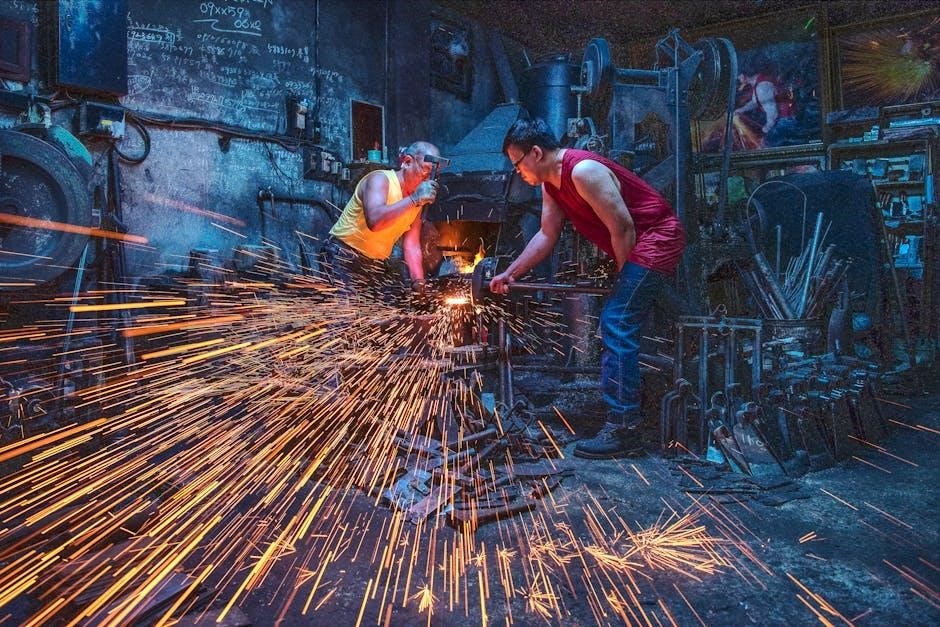
Blacksmithing proficiency itself is the core skill, naturally. However, several supporting skills and stats significantly impact your success. Strength (STR) is paramount, influencing hammering power and the ability to wield heavier tools. Dexterity (DEX) aids in finer work like filing and precision welding.
Intelligence (INT) is beneficial for understanding recipes and optimizing the forging process. Perception (PER) helps in identifying material qualities. Beyond core stats, skills like Metalworking (a prerequisite) and First Aid (for inevitable burns!) are crucial. Don’t neglect Cooking; maintaining stamina is key during long forging sessions. A higher skill level unlocks more complex recipes and improves crafting speed and quality.
Getting Started: Basic Tools and Materials
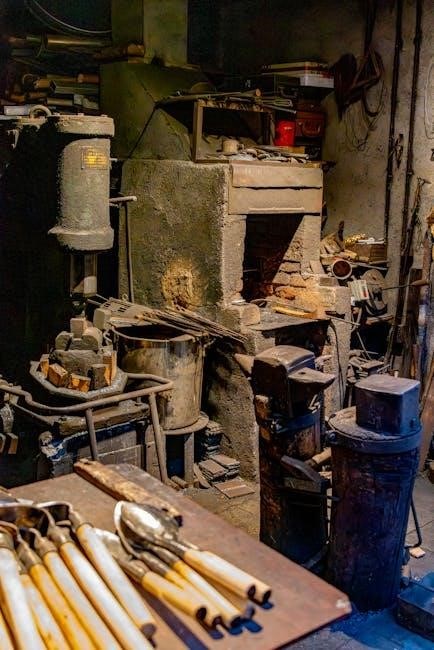
Embarking on blacksmithing requires securing fundamental tools and resources, including a sturdy anvil, a reliable hammer, and a source of workable metal for forging.
Finding or Crafting an Anvil
Anvils are the cornerstone of any blacksmithing operation in Cataclysm DDA, providing a solid surface for shaping metal. Finding a pre-made anvil can be challenging early on, often requiring exploration of abandoned workshops, garages, or military installations. However, crafting one is a viable alternative, though it demands significant resources and skill.
Initially, a stone anvil is the most accessible option, requiring stonecutting skill and a substantial amount of stone. These are less efficient than metal anvils but allow you to begin forging. Later, progressing to a steel anvil is crucial, demanding welding goggles and steel lumps – a bottleneck for beginners. Consider exploring discourse forums for strategies on circumventing early-game anvil material requirements.
Essential Tools: Hammers, Tongs, and Files
Blacksmithing isn’t just about the anvil; a suite of supporting tools is vital for success. Hammers are fundamental, with different weights impacting forging speed and efficiency. Early on, any hammer will suffice, but specialized hammers unlock later. Tongs are equally crucial, allowing safe manipulation of hot metal – without them, burns are almost guaranteed.
Several types of tongs exist, each suited for different object shapes. Files are used for refining shapes, removing imperfections, and achieving precise dimensions. Acquiring these tools often involves scavenging or crafting them yourself, requiring basic metalworking skills. Prioritize finding or creating a reliable set of tongs to avoid frustrating setbacks.
Sourcing Metal: Scrap, Ore, and Ingots
Metal is the lifeblood of blacksmithing, obtainable through various means. Scrap metal, found abundantly in urban environments, provides a starting point for early-game crafting, though its quality can be inconsistent. Ore, typically sourced from caves and mines, requires smelting into ingots before use. Common ores include iron, lead, and aluminum, each yielding different properties.
Smelting necessitates a furnace and fuel, transforming raw ore into usable ingots. Higher-quality ores yield stronger, more durable items. Salvaging vehicles and appliances also yields valuable metal components. Managing your metal supply is crucial; efficient scavenging and smelting are key to sustained blacksmithing progression.
The Blacksmithing Process: A Step-by-Step Guide
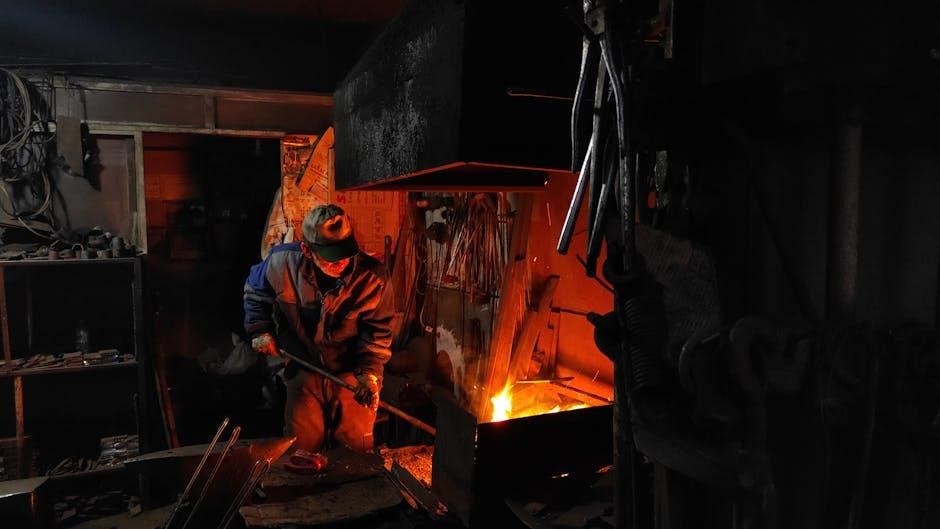
Blacksmithing involves heating metal, skillfully shaping it with tools, and refining the results through tempering and quenching for desired properties and durability.
Heating the Metal: Furnaces and Fuel
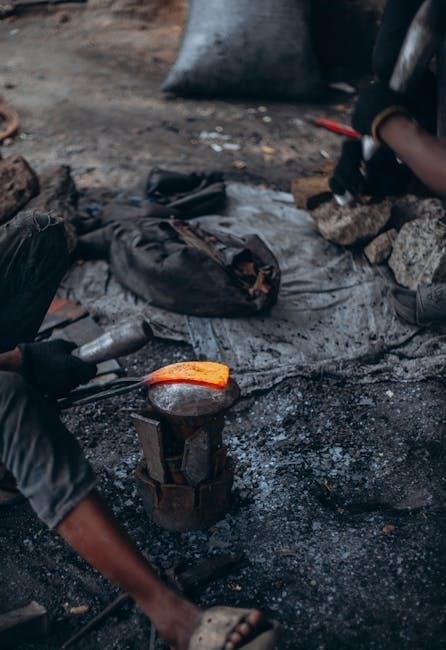
Effective blacksmithing hinges on achieving and maintaining the correct metal temperature. Early game, simple furnaces constructed from stone or brick are viable, utilizing wood or charcoal as fuel sources. However, these are less efficient.
Later, constructing a more advanced forge with metal linings dramatically improves heat retention and fuel efficiency. Coal becomes a preferred fuel, offering higher temperatures crucial for working harder metals.
Monitoring temperature is vital; overheating can ruin metal, while insufficient heat prevents shaping. Observe the metal’s color – from dull red to bright orange – to gauge its readiness. Fuel consumption is a constant consideration, demanding careful resource management.
Shaping the Metal: Hammering Techniques
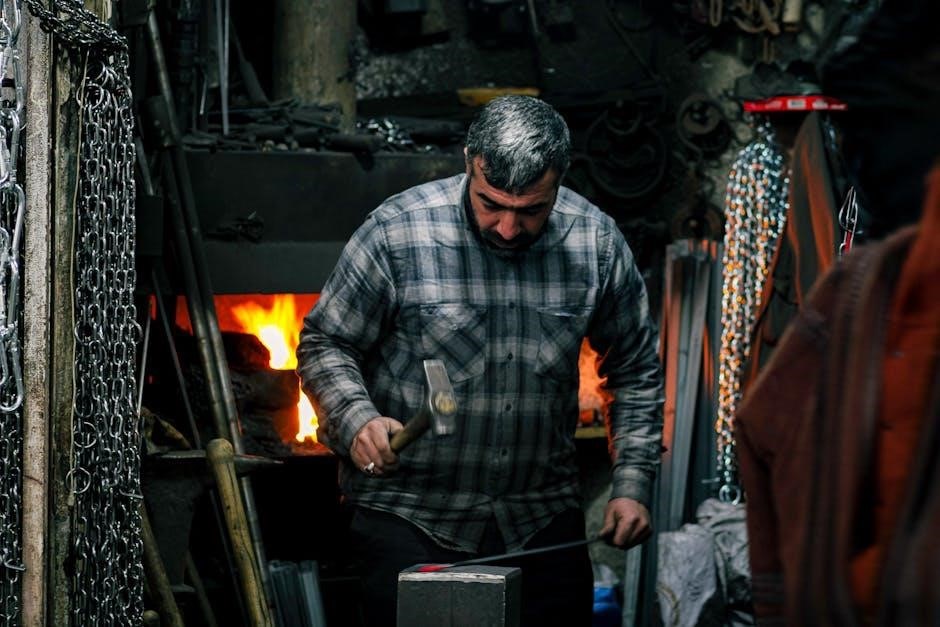
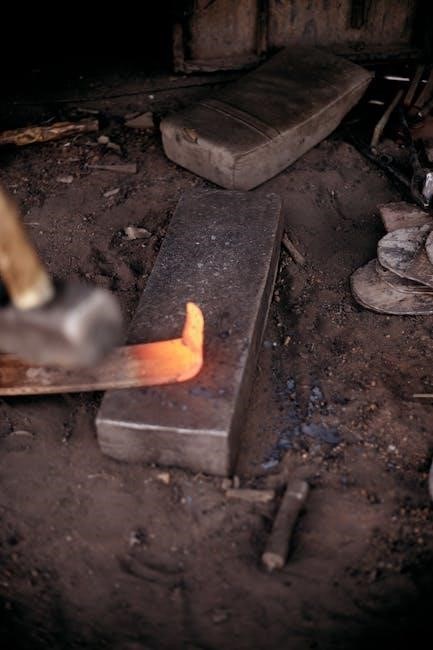
Hammering is the core of blacksmithing, requiring practice to master. Different hammer weights and shapes suit various tasks; lighter hammers for detail work, heavier ones for initial shaping. Controlled strikes are paramount, aiming for consistent force and accuracy.
Basic techniques include drawing out (elongating metal), upsetting (thickening it), and bending. Utilize the anvil’s horn for curves and rounded shapes. Proper technique minimizes wasted energy and prevents damage to both the metal and your tools.
Observe how the metal responds to each strike, adjusting your approach accordingly. Patience and precision are key to achieving desired forms and avoiding unwanted deformations.
Tempering and Quenching
Tempering and quenching are vital post-forging processes that dictate a metal’s final hardness and durability. Quenching rapidly cools heated metal, increasing its hardness but also making it brittle. Water, oil, or even air can be used, each yielding different results.
Following quenching, tempering reduces brittleness by reheating the metal to a lower temperature. This process relieves internal stresses and improves toughness. The tempering temperature directly impacts the final hardness – higher temperatures result in softer, tougher metal.
Experimentation is crucial to find the optimal balance for each metal type and intended purpose. Improper tempering can ruin a perfectly forged item.
Advanced Blacksmithing Techniques
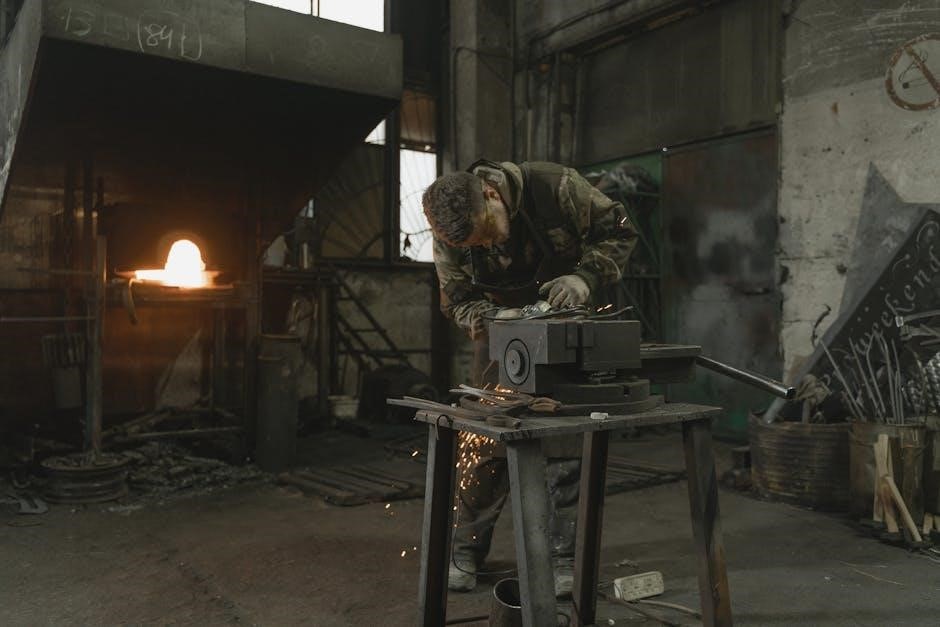
Mastering advanced techniques unlocks the creation of complex items, including welded structures, customized tools, and robust armor, enhancing long-term survival prospects.
Welding and Repairing
Welding is a pivotal advanced skill, enabling the joining of metal pieces to create more complex structures and tools. It requires a decent blacksmithing skill and, crucially, welding goggles to protect your eyes from the intense light. Without goggles, you risk severe vision impairment. Repairing broken items is equally vital for sustainability.
Damaged tools and weapons can be restored to near-original condition, saving valuable resources and time compared to crafting replacements. The success of a repair depends on your skill level and the extent of the damage. Learning to effectively weld and repair extends the lifespan of your gear, making you far more resilient in the harsh world of Cataclysm DDA.
Creating Custom Tools and Weapons
Blacksmithing truly shines when you move beyond basic repairs and begin crafting custom tools and weapons tailored to your specific needs. This allows for specialization, creating items with enhanced properties or unique functionalities not found in pre-made loot. Experimentation is key; different metal combinations and forging techniques yield varied results.
Imagine a reinforced crowbar for breaching fortified structures, or a uniquely balanced axe for efficient wood gathering. As your skill grows, you can craft increasingly sophisticated weaponry, from durable knives to powerful firearms components. This customization is essential for overcoming challenges and adapting to the ever-changing dangers of the apocalypse.
Crafting Armor and Protective Gear
Blacksmithing extends beyond weaponry, becoming vital for crafting robust armor and protective gear. Early on, simple leather armor can be reinforced with metal plates, significantly increasing your defense against both physical and piercing attacks. As your skills advance, you can forge complete sets of metal armor, offering superior protection against the myriad threats in the world.
Don’t underestimate the value of specialized protective gear. Crafting reinforced helmets, gauntlets, and boots can mitigate specific dangers, like head trauma or foot injuries. Properly maintained armor is a cornerstone of survival, allowing you to confidently explore dangerous areas and engage hostile creatures.
Blacksmithing Recipes and Progression
Recipes scale with skill; starting with simple tools, progressing to weapons, and culminating in advanced armor; Skill unlocks access to increasingly complex and effective crafting options.
Early-Game Recipes for Survival
Initial blacksmithing focuses on replicating and improving basic tools vital for survival. Prioritize crafting stone tools initially, then move to iron versions as metal becomes available. Simple knives, axes, and hammers are essential for gathering resources and defense.
Crucially, learn to repair existing tools to extend their lifespan. Early recipes include sharpening stones and simple repairs requiring minimal skill. Creating metal tongs is also a high priority, enabling safer handling of heated metal. Focus on recipes that provide immediate benefits, like improved cutting or chopping efficiency, to bolster your early-game capabilities. Don’t overlook the value of reinforcing wooden handles with metal bands for increased durability.
Mid-Game Recipes for Improved Gear
As your skill grows, focus on crafting more durable and effective gear. This stage involves creating iron and steel tools with improved stats, like higher cutting power or damage output. Begin forging basic weapons such as spears, short swords, and clubs, offering better combat options.
Prioritize crafting reinforced armor pieces – helmets, chest plates, and leg guards – to significantly increase your protection against various threats. Experiment with different metal types to find the optimal balance between weight and durability. Learning to craft metal shields is also crucial for defensive strategies. Don’t neglect the creation of specialized tools for specific tasks, like lockpicks or mining picks.
Late-Game Recipes for Powerful Equipment
Reaching the late game unlocks the potential for truly exceptional equipment. Focus on mastering techniques to forge high-quality steel and titanium weaponry, including longswords, axes, and even firearms components. Crafting full sets of steel or titanium armor provides unparalleled protection against even the most formidable creatures.
Experiment with advanced crafting recipes, such as creating specialized tools with unique properties, like a self-repairing hammer or a high-precision surgical kit. Consider forging powerful melee weapons with special modifications, and begin crafting experimental armor with integrated defensive systems. This stage demands rare materials and a high blacksmithing skill, but the rewards are substantial.
Troubleshooting Common Blacksmithing Issues
Blacksmithing can present challenges; metal fatigue, fuel inefficiency, and sourcing rare materials are frequent hurdles requiring patience and adaptation for success.
Dealing with Metal Fatigue and Breakage
Metal fatigue is a significant concern in Cataclysm DDA blacksmithing, as repeatedly heating and hammering weakens the material’s structure. This leads to increased chances of breakage during crafting or use. To mitigate this, avoid excessively high temperatures and prolonged heating times.
Utilizing higher-quality metal ingots, like steel over iron, drastically improves durability. Regularly inspecting tools and weapons for wear is crucial; repairing items before they break prevents catastrophic failure and material loss. Consider tempering techniques carefully, as improper quenching can induce brittleness. Finally, remember that even well-crafted items have a lifespan, and eventual replacement is inevitable.
Optimizing Fuel Consumption
Fuel efficiency is paramount in Cataclysm DDA, especially during extended blacksmithing sessions. Charcoal is generally the most readily available and efficient fuel source early game, while coal and wood offer alternatives. Minimize heat loss by ensuring your furnace is properly sealed and insulated – a well-constructed brick or stone furnace helps retain heat.
Avoid unnecessary heating; only heat the metal to the required temperature for the specific task. Batch crafting multiple items consecutively reduces wasted heat. Consider the metal type; some require lower temperatures than others. Finally, stockpile fuel near your forge to streamline the crafting process and reduce travel time.
Finding Rare Materials
Acquiring rare materials is vital for crafting advanced blacksmithing projects in Cataclysm DDA. Tungsten, titanium, and various alloys require dedicated searching, often found in military installations, industrial sites, or heavily guarded locations. Scavenging vehicle wrecks can yield valuable components.
Salvaging electronic devices provides crucial materials like copper and gold for alloy creation. Trading with NPCs, particularly those in settlements with established infrastructure, can unlock access to otherwise inaccessible resources. Remember to prioritize secure storage for these materials, as they are highly sought after by both survivors and hostile entities.